

/prod01/prodbucket01/media/durham-university/departments-/engineering/74202-5112X1676.jpg)
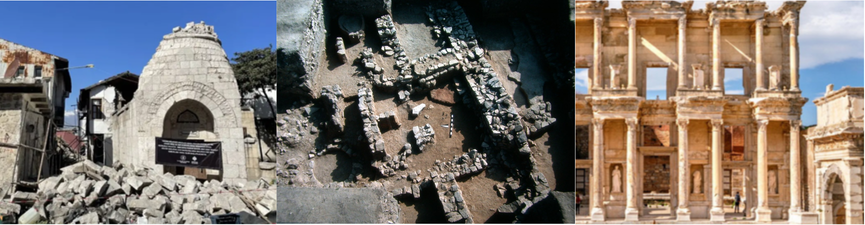
RESILIENT- Earthquake Awareness for Architectural Heritage Preservation
The RESILIENT project aims to increase awareness of seismic risk in local communities and policymakers in earthquake-prone historic areas of Turkiye, driving vernacular practices for a culture of seismic-prevention led by people’s everyday actions.
Resilient links social science, engineering and digital-cultural-heritage skills to predict and reduce tangible and intangible cultural heritage losses due to earthquake events.
British Council International Science Partnerships Fund
/prod01/prodbucket01/media/durham-university/departments-/engineering/resilient/british-council-1-logo-png-transparent.png)
Tubitak
/prod01/prodbucket01/media/durham-university/departments-/engineering/resilient/Tubitak.png)
/prod01/prodbucket01/media/durham-university/departments-/engineering/resilient/Meet-the-team1.jpg)
Meet the team
The RESILIENT team combines expertise in computational mechanics, structural and geotechnical engineering, and social science.
Aim and Objectives
RESILIENT aims to increase awareness of seismic risk in local communities and policymakers in earthquake-prone historic areas of Turkiye, driving vernacular practices for a culture of seismic-prevention led by people’s everyday actions.
A primary goal is to engender an active exchange between academic research and community needs, thereby fostering a pervasive awareness and understanding of seismic risks among local communities/stakeholders, and encouraging their proactive involvement in preserving their cultural legacies. With the support of an extensive international research alliance and the active engagement of heritage custodians and cultural associations, RESILIENT is committed to advancing UN-SDG 11: Sustainable Cities, aiming to instigate substantial progress in seismic risk preparedness and mitigation, effectively protecting Turkiye's precious cultural heritage.
Transdisciplinary Methodology
RESILIENT adopts a transdisciplinary methodology, integrating advanced engineering analyses with innovative community engagement, data-collection methods, and visualization techniques, incorporating social aspects, like rural areas and small villages, ethnic perspectives, and gender relevance. The project engages and challenges Digital Architectural Heritage at multiple scales, combining advanced numerical models built on up-to-date digital survey and in-situ non-destructive tests, to identify combined geotechnical-structural criticisms in cultural heritage assets and predict potential damage scenarios, with Geographic Information System (GIS) tools to effectively visualise the spatial extension of various engineering and social parameters and their relationships. It will concurrently delve into an extensive social investigation, undertaking stakeholder analyses to decode complex social structures, probing into the communities' connections to heritage sites, and scrutinising the obstacles and enablers within organisational disaster preparedness.
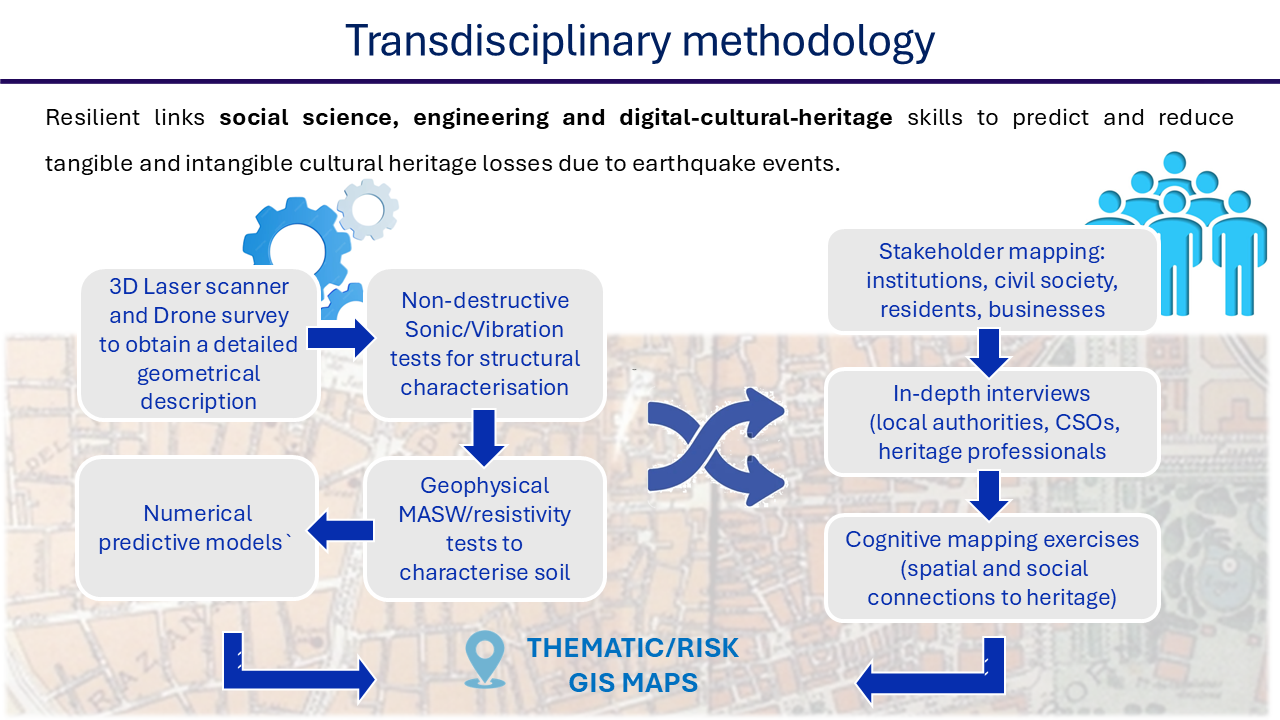 RESILIENT Transdisciplinary Methodology
Community Engagement
RESILIENT will use multiple community engagement and data analysis methods, including desk studies, in-depth interviews, vignette surveys, cognitive mapping, and forum theatre-workshop, targeting five groups defined according to their relation to cultural heritage: 1-Residents; 2-Neighbourhood associations, local activists and NGOs; 3-Local Authorities and Government Officials; 4-Business Owners and Local Entrepreneurs; 5-Practitioners involved in cultural heritage conservation.
These methods aim to assess local perceptions of seismic risk and the cultural values of heritage sites, visualise their spatial and social connections, and engage local youth through interactive theatre to educate and gather insights on heritage protection strategies to boost community resilience and proactive participation in conserving cultural heritage against earthquakes.
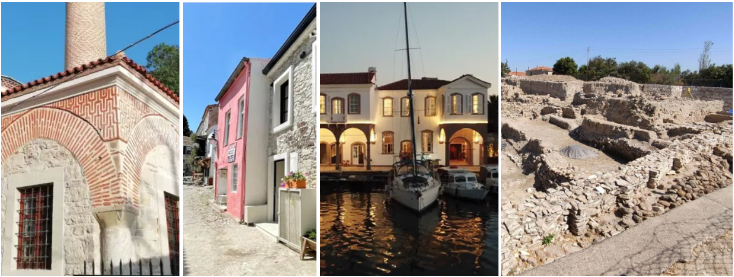
RESILIENT directs its efforts towards the Urla district of the İzmir province (western Turkiye), an area of significant cultural heritage and archaeological importance, including the ancient city of Klazomenai, dating back to 4000BC.
RESILIENT Academic Partners
Find out more about our Academic Partners below.
Durham University, Department of Engineering
/prod01/prodbucket01/media/durham-university/departments-/engineering/resilient/Durham-Uni-logo-resized.png)
Atilim University
/prod01/prodbucket01/media/durham-university/departments-/engineering/resilient/Atlim-university-resized.png)
Middle East Technical University - METU
/prod01/prodbucket01/media/durham-university/departments-/engineering/resilient/METU-logo-resized.png)
RESILIENT Industrial Partners
Find out more about our Industrial Partners below.
Regio Cultural Heritage Management Consultancy (Turkey)
/prod01/prodbucket01/media/durham-university/departments-/engineering/resilient/Regio-cultural-heritage-management-consultancy-(Turkey).png)
Gruppo Sismica: Smart Structural Solutions (Italy)
/prod01/prodbucket01/media/durham-university/departments-/engineering/resilient/Gruppo-Sistemica.png)
RESILIENT Network
Find out more about our network below.
Wrench - Whispers of Time as Narratives of Climate Change
/prod01/prodbucket01/media/durham-university/departments-/engineering/resilient/WRENCH.png)
H360
/prod01/prodbucket01/media/durham-university/departments-/engineering/resilient/H360.jpg)